
Move Beyond Demand-Supply Balancing. Optimize Enterprise Profitability.

SOPtimAi is an AI-powered Integrated Business Planning platform that unifies production optimization, inventory planning, logistics, and customer supply and source mapping. It integrates planning decisions to maximize profit, beyond closing the demand-supply gap.

Explore Platform

Traditional S&OP Was Never Built for Profit

Volume balancing can overlook asset utilization, internal material movement, logistics dependencies, customer prioritization and financial outcomes. These gaps can lead to costly, suboptimal decisions.

Traditional S&OP

  • Balances demand and supply volumes
  • Individual site KPAs can dominate multi-site planning
  • Input, scenarios, reviews and retuning can take days
  • Finance remains disconnected from operations
  • Relies on established patterns and assumptions

SOPtimAi

  • Optimizes enterprise profitability
  • Plans across sites and products in one model
  • Optimum plan rollout within 20 minutes of input provision; overall planning cycle up to one day
  • Connects finance, operations and supply chain by design
  • Evaluates practically implementable opportunities beyond set notions

One Engine. Every Constraint. Every Discipline. One Objective.

SOPtimAi brings operational constraints, financial variables, production capabilities, logistics limits, market demand and pricing signals into a unified optimization engine.<br>The platform evaluates 45,000+ decision variables, 60,000+ constraints and 10,000+ nonlinear constraints simultaneously.<br>Deploy on premises or in the cloud. Flexible, tailored connections can work with SAP, Oracle, custom ERP/M environments and spreadsheet-based inputs.<br>

Inputs

Demand, price, plant data, inventory

Constraints

Capacity, routing, logistics, business rules

Decisions

Production, sourcing, allocation, stock

Output

Implementable, profit-optimized plan

45K+decision variables
60K+constraints
10K+nonlinear constraints

Finance, Operations, Inventory, Internal Logistics and Customer Supply in One Engine

SOPtimAi replaces iterative planning what-ifs with one model that optimizes production, inventory and product demand-supply decisions together.

The Numbers That Matter to Your Board

300 MMUSD+

Potential value capture

Opportunity estimate from the supplied brief

45,000+

Decision variables

Optimized simultaneously

60,000+

Constraints

Including 10,000+ nonlinear constraints

Multi-Site

Enterprise-wide planning

Across products and plants

20 min

Optimization run

After required inputs are provided

Profit-Centric

One planning objective

Inventory, availability and supply together

Built for Industrial Complexity, Not Generic ERP Planning

01

Profit-first optimization across the enterprise, beyond volume balancing.

02

Cross-functional IBP connects finance, production, inventory management and supply chain.

03

Inventory and product availability optimized as one connected problem.

04

45,000+ decisions considered together across production, inventory, internal logistics and customer supply.

05

Optimization run within 20 minutes of input provision, compared with days of iteration in legacy planning.

06

Purpose-built for multi-site, multi-product, multi-constraint industrial operations.

One Platform. Every Enterprise Priority.

Choose a role to see how SOPtimAi supports its planning priorities.

CFOs

Optimize 45,000+ decision variables across the corporation and identify potential untapped margin through AI-driven profitability optimization.

Supply Chain Heads

Roll out a stronger plan for inventory handling, sourcing and site-to-customer mapping.

Planning Teams

Bring production, inventory and internal logistics into a profit-optimized S&OP cycle, with an optimization run within 20 minutes of receiving the required inputs.

CIOs / CTOs

Deploy on premises or in the cloud with tailored integration to SAP, Oracle, custom ERP/M environments and spreadsheet-based data.

Operations Heads

Receive an optimized production and inventory management plan designed for implementation within physical operating constraints.

Purpose-Built for Process Manufacturing

Planning models account for the operating constraints and commercial decisions of each industry.

Petrochemicals

Complex value chains, multi-site production interdependencies, inventory and allocation under volatile input costs.

FMCG

Demand-driven S&OP and inventory planning across fast-moving, multi-SKU networks.

Specialty Chemicals

Constraint-heavy inventory and availability planning at plant and portfolio level.

Pharma

Demand- and pricing-aware S&OP and inventory planning with margin in view.

Backed by 15+ Years of Industrial Engineering Expertise

SOPtimAi draws on Ingenero's S&OP and ERPM expertise, applied AI heritage and experience in industrial operations. Its planning approach is grounded in engineering and operational constraints.

Part of the Ingenero Solutions family

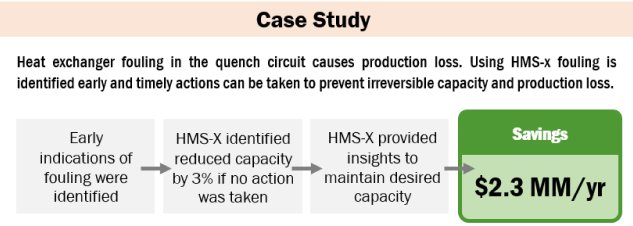
Case study

Contact Us

Frequently Asked Questions

Yes. Ingenero can help reduce both energy costs and emissions by optimizing energy-intensive systems such as furnaces, steam networks, and boilers. Our solutions reduce fuel and utility consumption, which directly lowers operating costs while also cutting associated greenhouse gas (GHG) emissions from energy use.

Sustainability consulting improves industrial operations as it helps in pinpointing inefficiency across every section, including water, energy, and process systems. In this way, organizations can take proactive measures and move towards net-zero goals.

Energy efficiency studies typically cover major utility and process systems such as boilers, furnaces, steam and cooling systems, compressors, pumps, refrigeration units, HVAC systems, and electrical distribution networks. These studies also extend to process-level energy use, helping to identify inefficiencies across the entire plant rather than at individual equipment alone.

Ingenero is known for combining engineering expertise with digital solutions such as AI, digital twins, and advanced analytics to deliver practical, implementable improvements in real-world plant operations.